
It's just like every other morning. You're standing in front of the mirror, tilting your face toward the light, trying to work out why your skin looks duller than it used to. Maybe it's fine lines. Maybe it's old acne scars catching the light at the wrong angle. Maybe it's just some texture that makeup foundation won't sit on properly anymore.
So you start researching. Within minutes, two words keep coming up: dermaplaning and microneedling.
Both are popular, both promise smoother, brighter skin, and both are non-invasive treatments. However, they work in completely different ways and on different skin concerns. Confusing the two can mean choosing the wrong treatment for what you're actually trying to fix.
This guide breaks down how each one works, what it's best for, and how to decide which suits your skin. And yes, you can sometimes have the two.
Why the Confusion Happens
Dermaplaning and microneedling often get lumped together because they're both quick, non-invasive treatments that promise the same result: smoother, brighter skin. Social media doesn't help either, since before-and-after clips rarely explain why a treatment worked.
But "smoother skin" isn't always achieved the same way. Sometimes it comes from clearing away dead skin and fine hair sitting on the surface. Other times it comes from encouraging your skin to rebuild itself from the inside out. Dermaplaning does the first. Microneedling does the second. Once you know which approach matches what you're actually trying to fix, the choice becomes far less confusing.
What Is Dermaplaning?
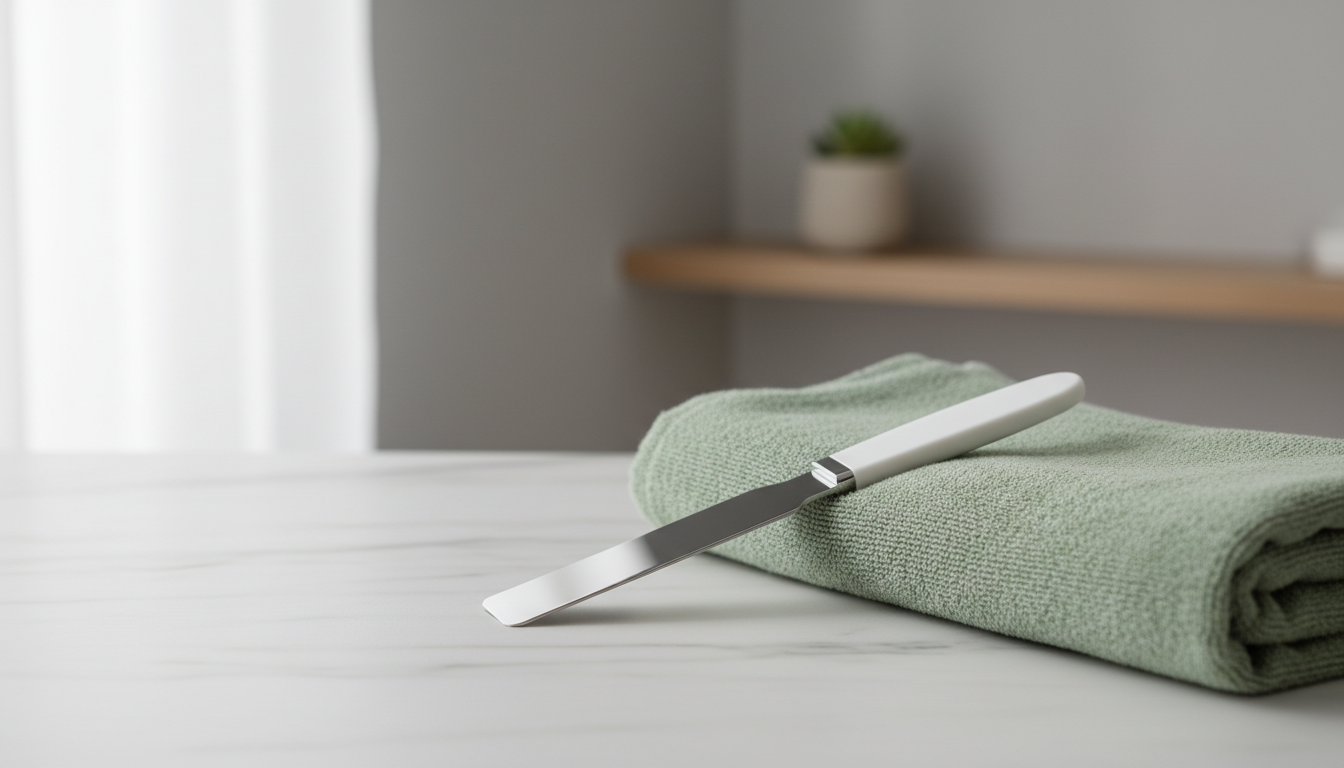
A dermaplaning treatment is a manual exfoliation technique. A trained practitioner uses a sterile, surgical-grade blade to gently scrape away two things from the surface of your skin. One is dead skin cells. Second is vellus hair, the fine, fair facial hair most people know as "peach fuzz."
The process requires no needles, no chemicals, and it causes no injury beneath the surface. The blade only touches the outermost layer of skin, called the stratum corneum, which is really just the dry, dead layer your skin sheds anyway.
What dermaplaning is good for:
Dullness and uneven texture
Peach fuzz that catches makeup or light
Mild acne scarring and sun damage
Helping serums and moisturisers absorb better
Downtime: None. Skin looks brighter straight away, and you can wear makeup immediately after.
Because dermaplaning only works on the surface, results last about three to four weeks before hair and dead skin cells build back up. Most people book it monthly.
What Is Microneedling?
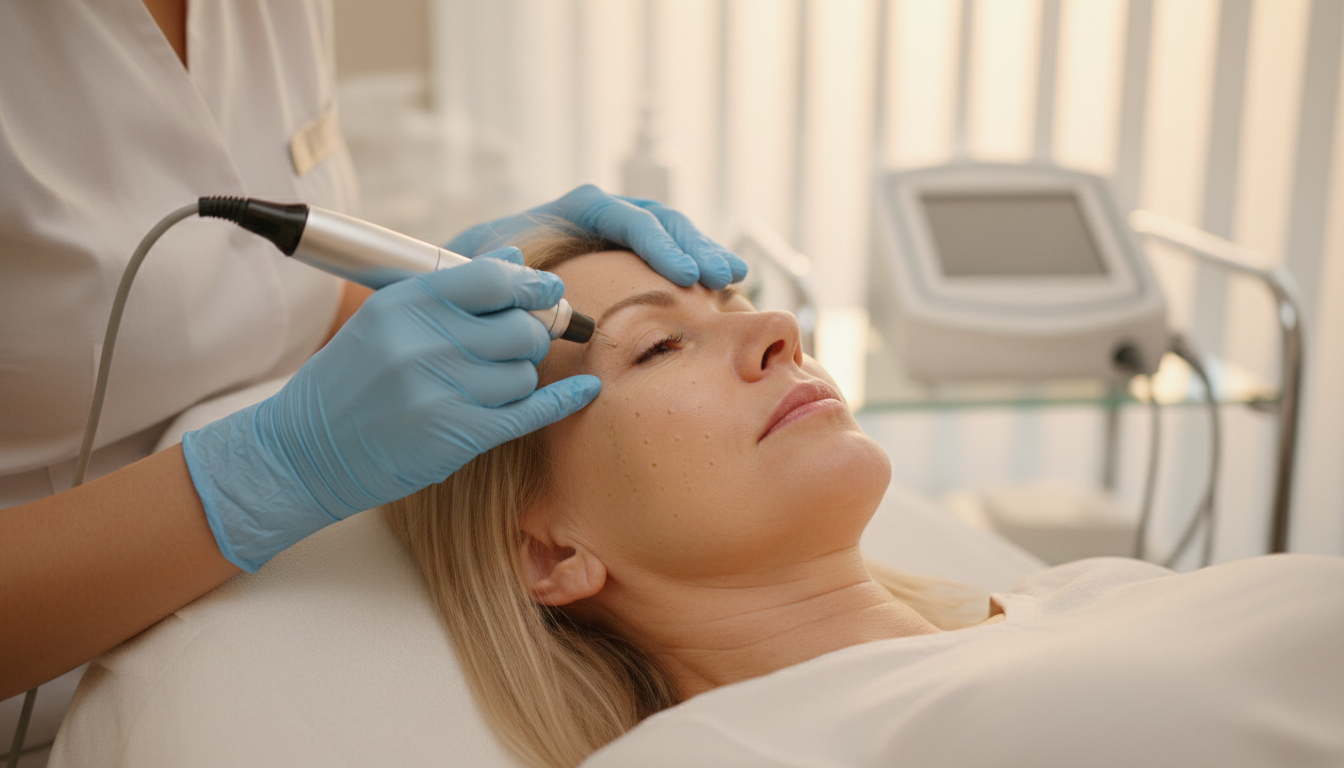
Microneedling for skin concerns like acne scars and fine lines works at a deeper level. A device fitted with very fine, sterile needles creates a grid of tiny, controlled punctures in the skin. This is sometimes called collagen induction therapy, because that's exactly what it triggers.
Those micro-injuries are too small to see, but your skin treats them as a real wound. In response, it produces new collagen and elastin, the proteins responsible for firm, smooth skin, over the following weeks.
What microneedling is good for:
Acne scars
Fine lines and early signs of ageing
Enlarged pores
Uneven skin texture and tone
Downtime: Expect redness for one to three days, similar to mild sunburn. Results build gradually, with most people seeing the full effect four to six weeks after a course of sessions.
Dermaplaning vs Microneedling: Key Differences
The simplest way to think about it is that dermaplaning refreshes the surface. Microneedling rebuilds from underneath.
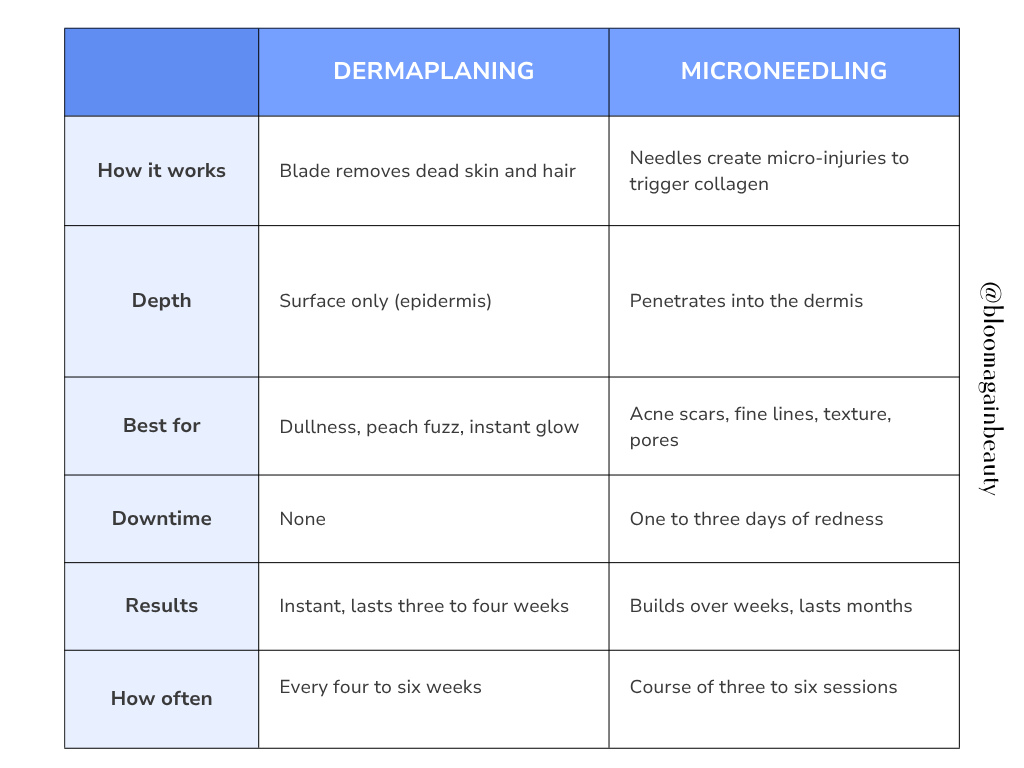
Neither treatment is "better." They're built to solve different problems.
Can You Have Both?
Yes, and many people do. Dermaplaning is often performed before microneedling, because clearing away dead skin first gives the needles a clean surface to work on, which can improve product absorption afterwards too.
That said, combining treatments in one sitting should only happen under the guidance of a qualified practitioner. They can judge whether your skin can handle both in a single session, or whether it's safer to space them apart.
Side Effects and Safety
Both treatments are considered safe when carried out by a trained practitioner, but it's worth knowing what's normal and what isn't.
Dermaplaning:
Mild, short-lived redness immediately after treatment
A small risk of nicks if the skin has active spots or a rough texture
Not generally recommended during an active acne breakout, as the blade can spread bacteria
Microneedling:
Redness and slight swelling for one to three days, similar to sunburn
Occasional pinpoint bleeding during treatment, which settles quickly
Not recommended if you have active acne, an active skin infection, or are using certain prescription retinoids, since these increase the risk of irritation
Neither treatment should leave you with anything beyond mild, short-term sensitivity. If your skin reacts more than expected, or you're unsure whether a current medication or skin condition rules out either treatment, that's exactly what a consultation is for.
Who Should Choose Which?
If you want a quick refresh with zero downtime, perhaps before an event or a big week, dermaplaning is the simpler option.
If you're dealing with acne scars, fine lines, or skin texture that's bothered you for a while, microneedling targets these concerns at a deeper level, though it takes a few sessions and a bit of patience.
Skin type matters too. Oily and acne-prone skin tends to require more caution with the dermaplaning blade, while dry or mature skin often responds well to the gentle exfoliation it provides. Sensitive skin can usually tolerate both, but typically does better starting with fewer, more spaced-out sessions.
If you currently have active acne or a skin infection, mention this at your consultation. Both treatments are generally avoided on active breakouts, since they can spread bacteria or irritate skin that's already inflamed.
FAQs
Does dermaplaning hurt? No. Most people describe a light scratching sensation. No numbing cream is needed.
Will my facial hair grow back thicker after dermaplaning? No, this is a myth. Vellus hair grows back exactly as it was before.
How many microneedling sessions will I need? Most people need three to six sessions, spaced four to six weeks apart, for full results, though some improvement is often visible after the first session.
Can I wear makeup straight after either treatment? Yes, after dermaplaning. After microneedling, it's best to wait 24 hours for your skin to settle.
Is either treatment suitable for sensitive skin? Both are generally well tolerated, but a consultation lets your practitioner check your skin first and recommend the right approach for you.
Which treatment is better for acne scars specifically? Microneedling, in most cases. Because it works beneath the surface to stimulate new collagen, it addresses the structural changes that cause acne scarring rather than just smoothing the surface.
How soon will I see results? Dermaplaning shows results immediately. Microneedling builds gradually, with visible improvement usually appearing a few weeks after each session as new collagen forms.

Which One Fits Your Skin?
The honest answer to "dermaplaning vs microneedling" isn't really about which one wins. It's about which one matches the concern you're trying to solve. Is it dullness and texture? Or is it scarring and fine lines that need a deeper approach?
If you're curious whether dermaplaning or microneedling is right for your skin, at Bloom Again Beauty, we offer free skin consultations to help you decide.